Skip to main content Skip to search Skip to main navigation
Free shipping from 49,-€ in Germany
Fast shipping
Traditional beekeeping since 1904
Production in-house
info@imkergut.de
Bienenstöcke auf einer Wiese

Products with pollen

Small coloured balls - directly from the beekeeper.
Whether pure or as an ingredient in other products, our pollen is guaranteed pesticide-free, carefully harvested, and gently dried.

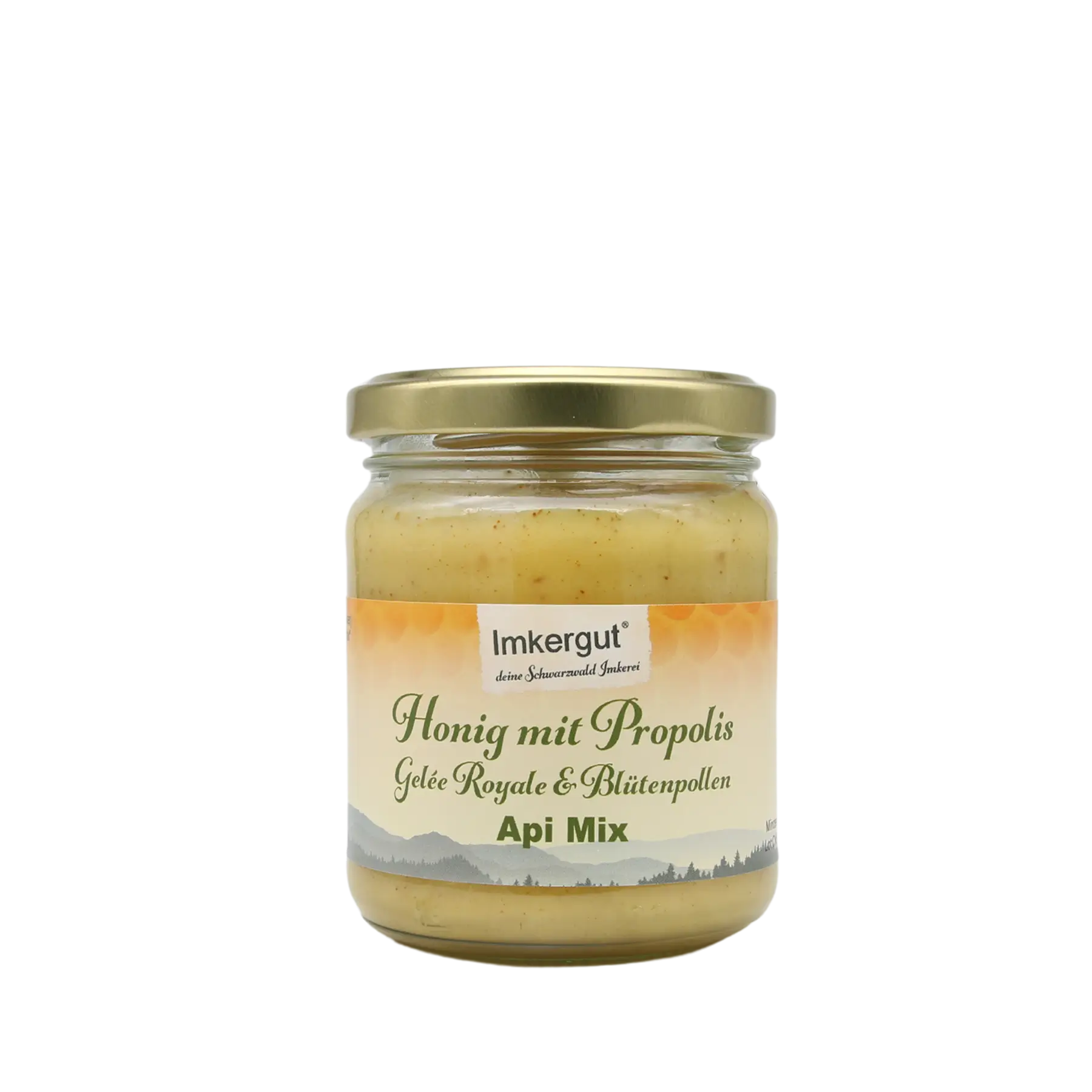
Api-Mix mit neuem Etikett
Api Mix 250 g jar
Fine bread spread for gourmets with the valuable treasures of the beehive.

Content: 0.25 Kilogramm (€52.00 / 1 Kilogramm)
Regular price: €13.00
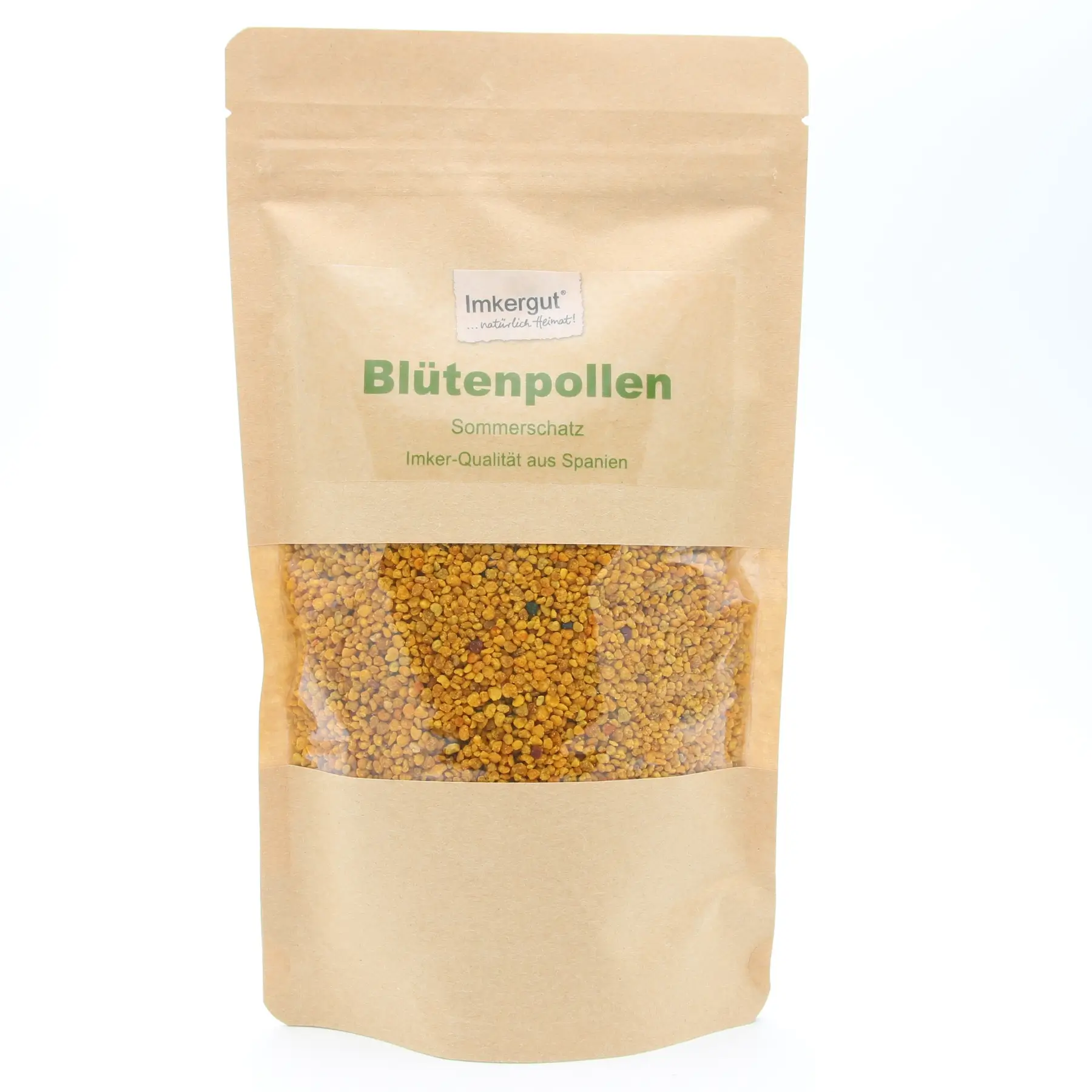
Bienen Blütenpollen im Beutel
Pollen 250 g bag
Carefully dried pollen from Spain that retains its value.
Select Content grams

Content: 0.25 Kilogramm (€54.00 / 1 Kilogramm)
Regular price: €13.50
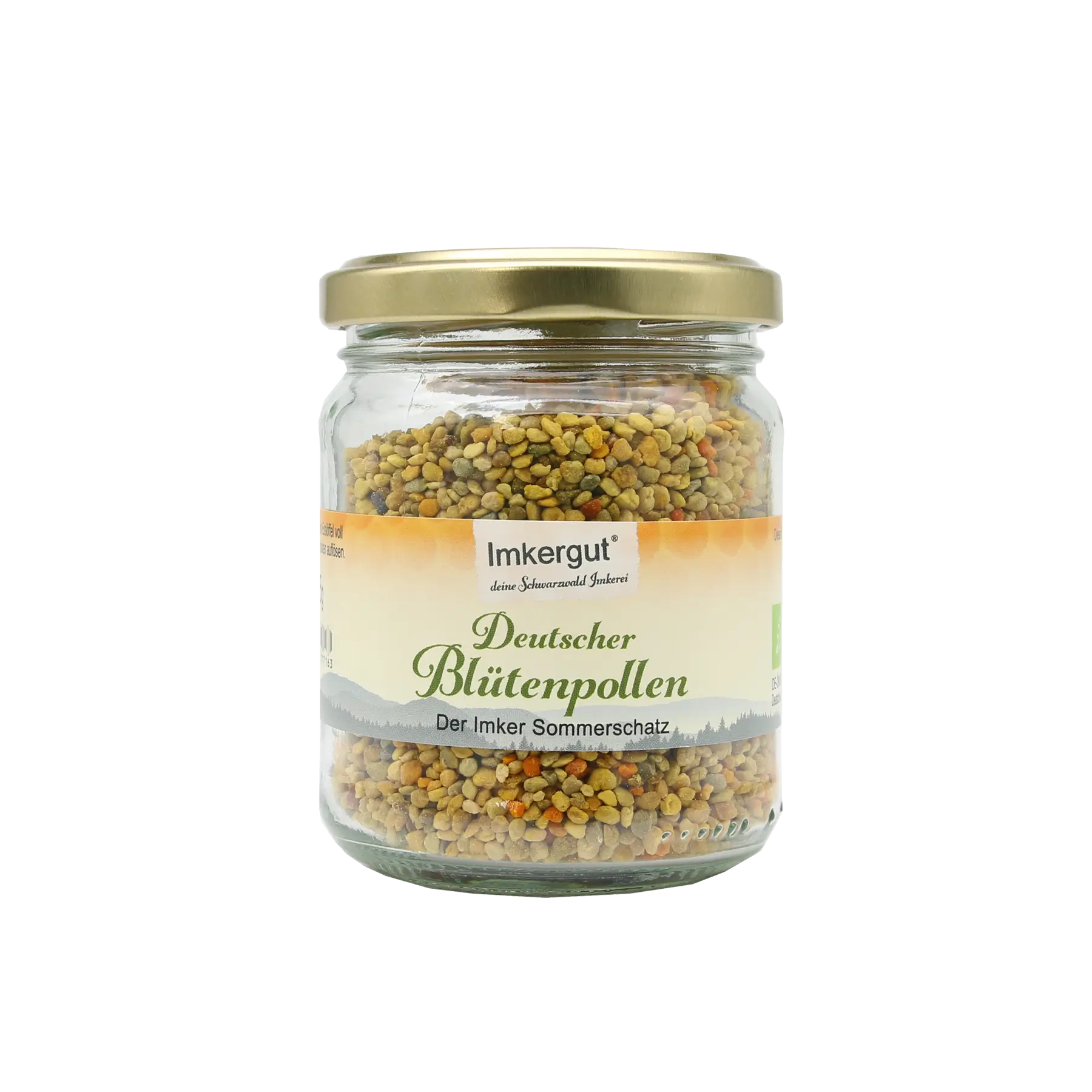
Deutscher Blütenpollen 125 g Glas mit neuem Etikett
German pollen 125 g jar
Bioland-certified German flower pollen in top quality, gently dried to preserve its value.
Select Content grams

Content: 0.125 Kilogramm (€112.00 / 1 Kilogramm)

Regular price: €14.00
Perga im Glas von vorne
Perga - Bee bread 100g
Practical snack in between, straight from the beehive.

Content: 0.1 Kilogramm (€190.00 / 1 Kilogramm)

Regular price: €19.00
Propolis Trinkampullen frontal
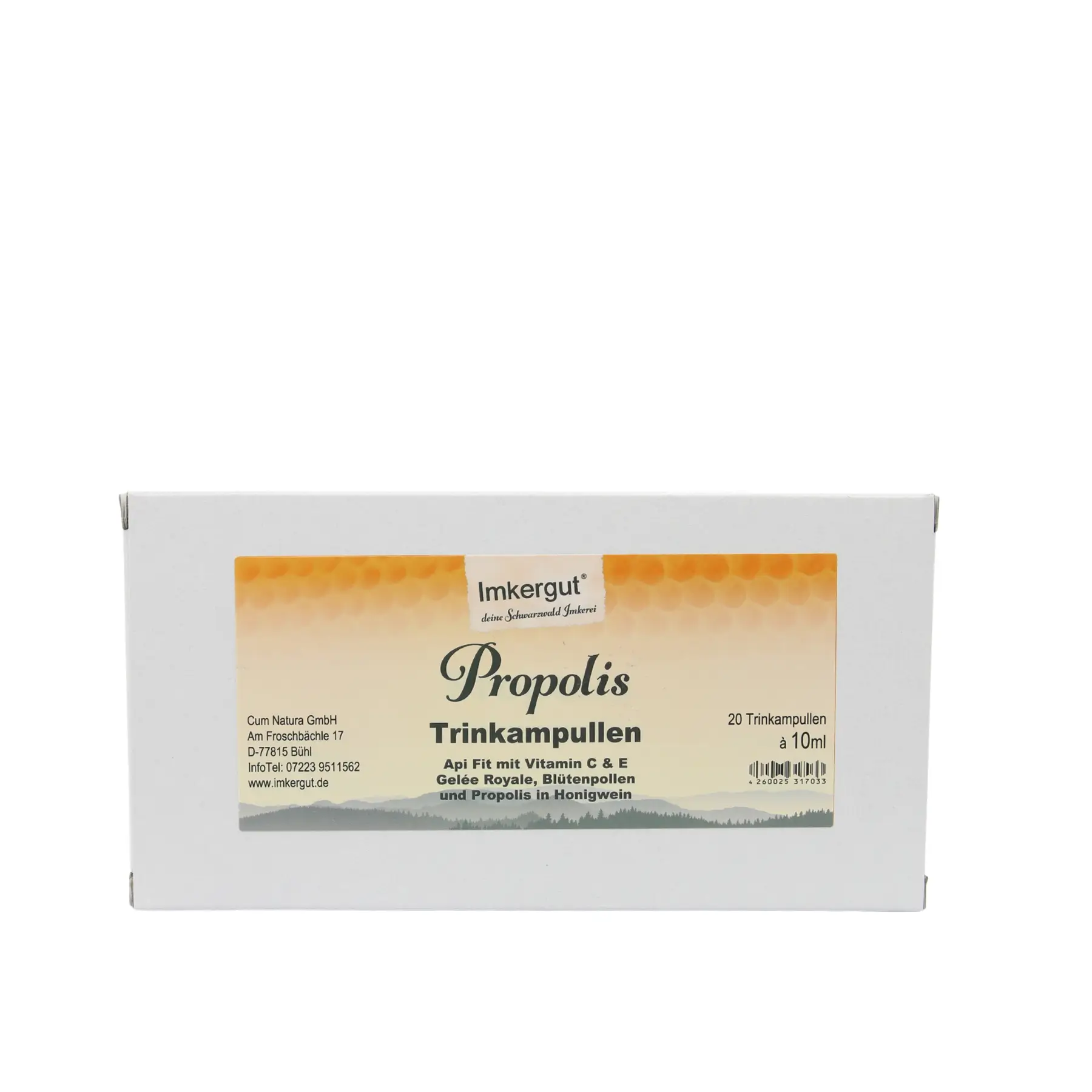
Propolis drinking ampoules (Api Fit with alcohol) 20 x 10ml
Food supplement with propolis, royal jelly and bee pollen.

Content: 0.2 Liter (€195.00 / 1 Liter)
Regular price: €39.00
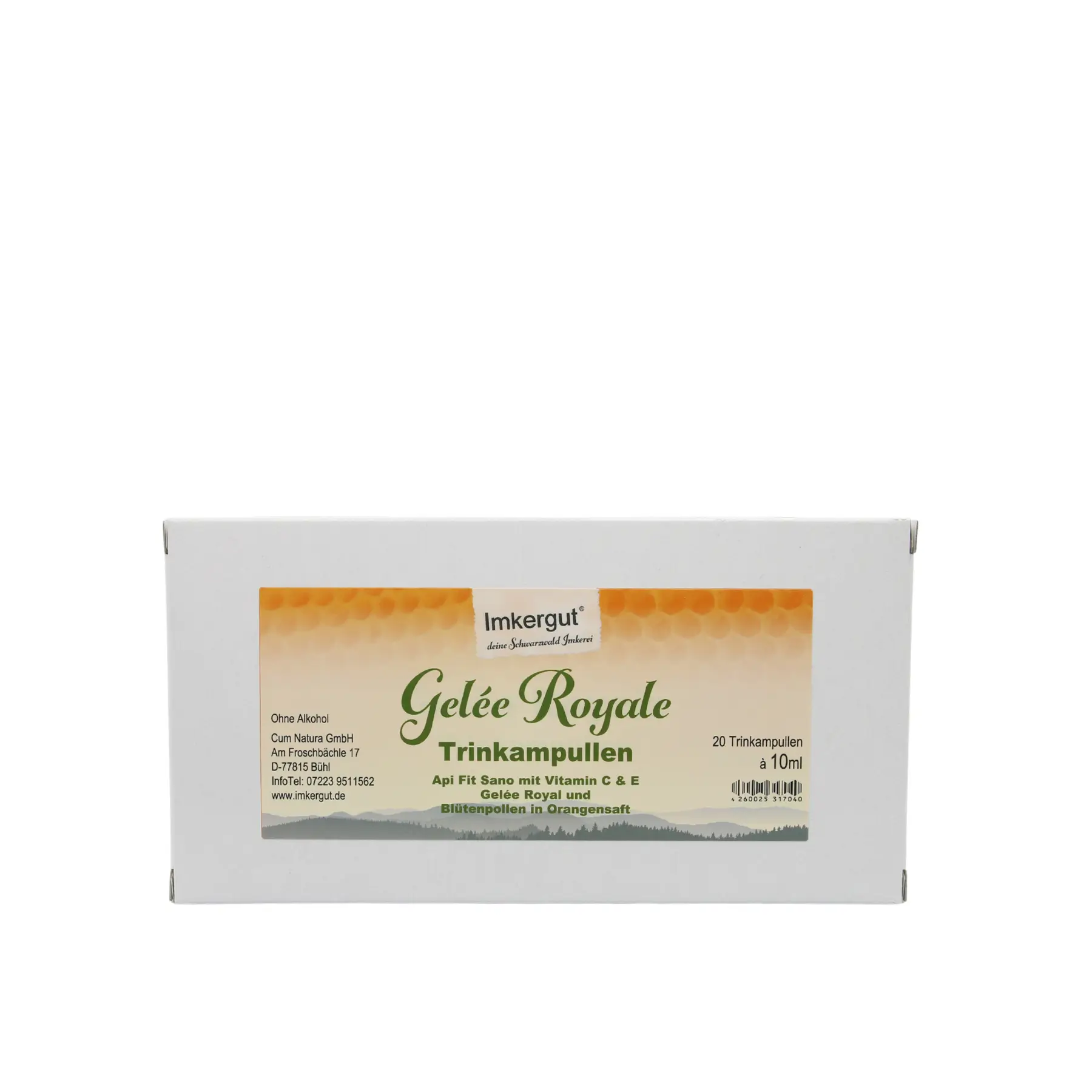
Gelee Royale Trinkampullen frontal
Royal jelly drinking ampoules (Api Fit Sano without alcohol)
Drinking ampoules with royal jelly, bee pollen and vitamins.

Content: 0.2 Liter (€195.00 / 1 Liter)
Regular price: €39.00
Gelée Royale Trinkkur frontal
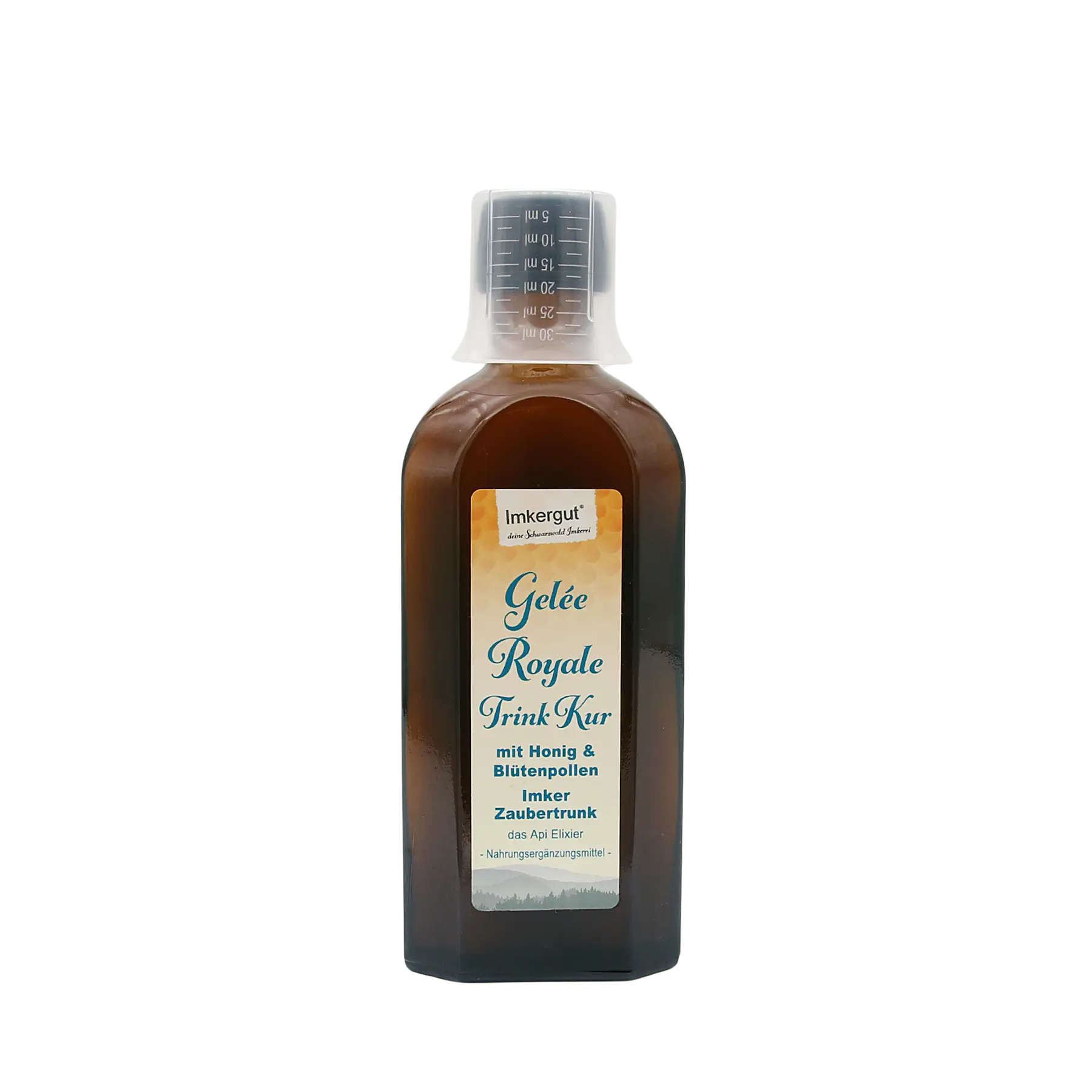
Royal jelly drinking cure 250ml
Alcohol-free combination of honey, bee pollen and royal jelly in orange juice concentrate.

Content: 0.25 Liter (€136.00 / 1 Liter)

Regular price: €34.00
Blütenpollen Nahaufnahme

Pollen

Natural addition to your daily menu

Pollen is essential for the pollination of flowering plants, ensuring their reproduction and a stable harvest. It consists of fine granules that form on the anthers of flowers. Pollination, the transfer of pollen, can occur either directly or indirectly. In direct pollination, pollen falls onto the stigma of the same flower, whereas in indirect pollination, pollen is transferred by bees, other insects, or wind to the stigmas of other flowers. 

For bees, the process works as follows: While collecting nectar, pollen sticks to the tiny hairs on their bodies. By mixing the pollen with nectar and enzymes, bees shape it into the characteristic "pollen pants," which they transport back to the hive. There, pollen serves as an essential food source for bee larvae. For humans, pollen is a tasty addition to everyday life, like for example for breakfast.
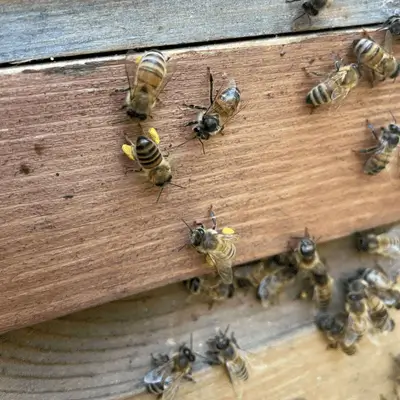
Gut sichtbare Pollenhöschen an den Beinen der Bienen.

Harvesting pollen

Pollen is collected with the utmost care to avoid disturbing the bees. Special pollen traps are placed at the entrances of the beehives. As the bees pass through the fine mesh, they shed a portion of their pollen, which is then collected, cleaned, and gently dried. The pollen is also tested for contaminants to ensure only safe, high-quality products reach the market. These pollen traps are only used periodically to ensure that bees retain enough food for their brood and that the colony remains healthy.

Blütenpollen auf einer Hand

Components of pollen

Pollen is composed by the following ingredients, which can differ:
• 20-30% different sugars
• 20-22% proteins
• 10-12% free amino acids
• ca. 6% fibres
• ca. 5% fats
• 2-4% potassium
• 1-2% magnesium 
• 1-1,5% calcium 
• 1-2% iron
• 0,2-1% silica
• 1-1,5% phosphor 
• vitamins, ferments, hormons and other substances

Ein Glas Blütenpollen neben einem Glas Milch

Consumption of pollen

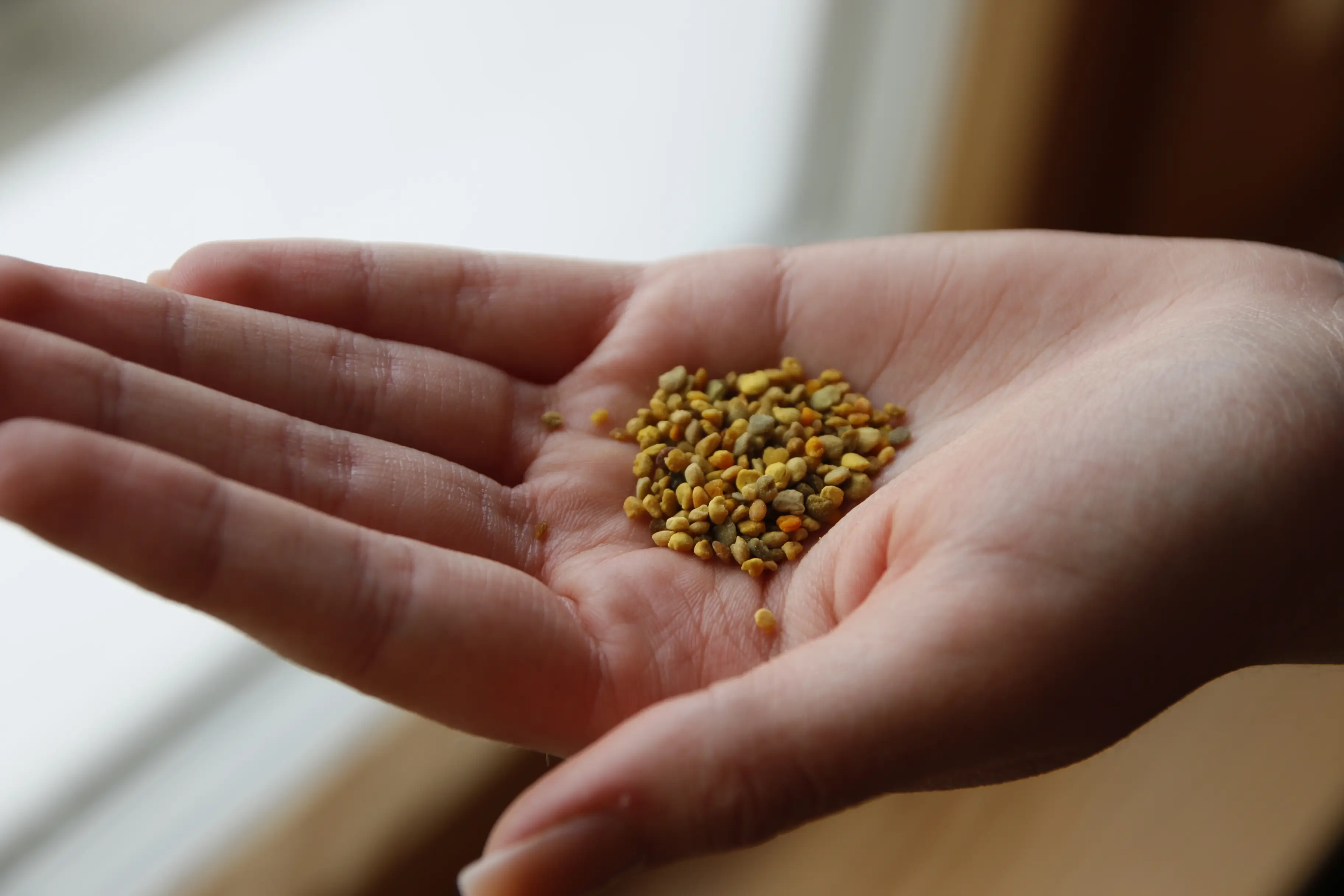
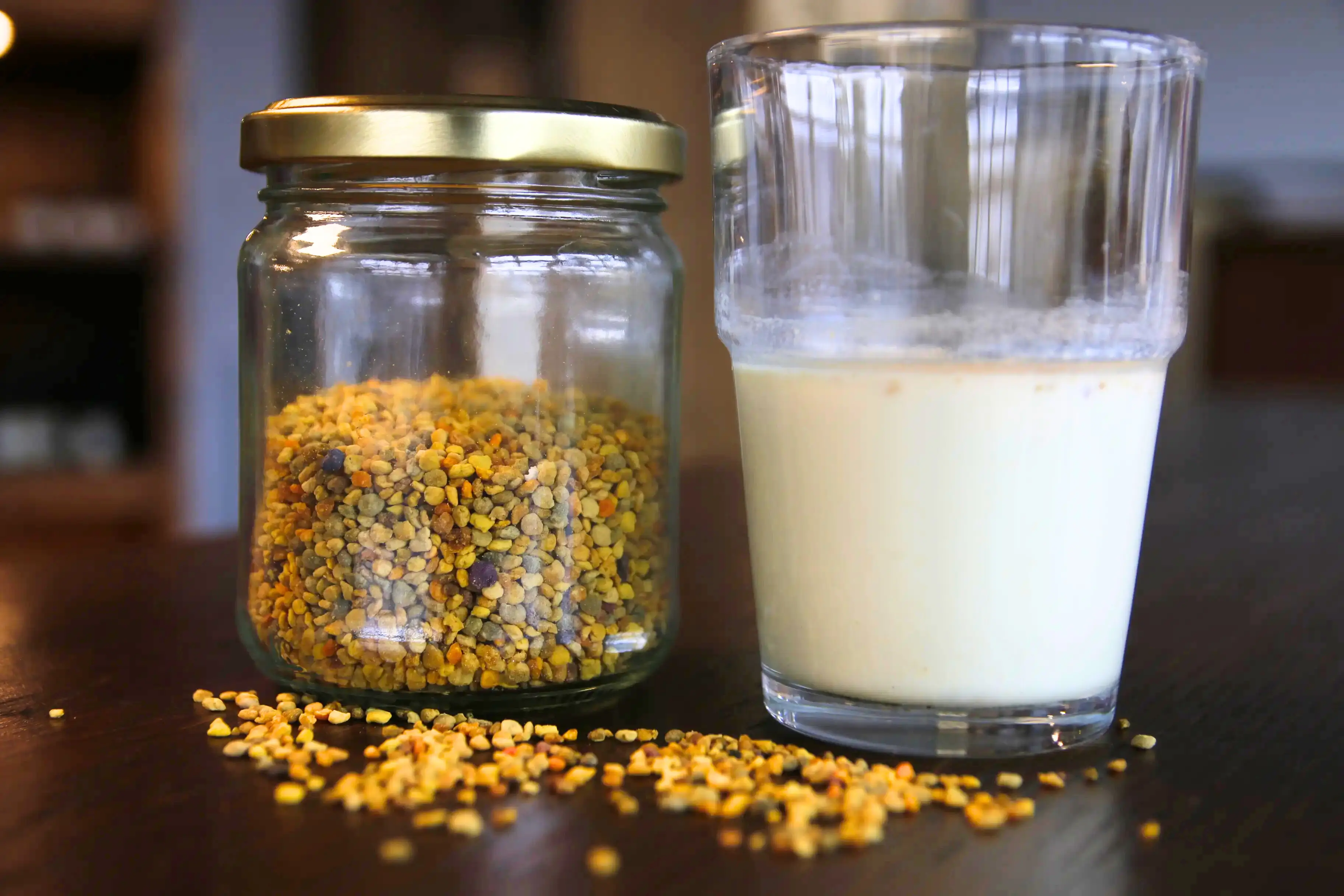
Pollen can be easily integrated into everyday life. It can be consumed on its own or mixed into yogurt, muesli, smoothies, or porridge. It tastes especially good when soaked in milk or juice and refined with a teaspoon of honey. Beginners should start with one teaspoon per day and gradually increase to one tablespoon. It is important to chew the pollen well or soak it.

Buying pollen – directly from the beekeeper

We offer pollen of organic quality from Germany, sourced in a pesticide-free environment. Additionally, we provide pollen from a Spanish nature reserve. Are you looking for bee bread, also known as perga? You can purchase our fermented flower pollen in 100-gram jars. Pollen is also a key ingredient in our Api Mix which combines premium bee products—honey, propolis, royal jelly, and pollen—in one jar. Furthermore, pollen is included in our royal jelly drinking cure, royal jelly ampoules, and propolis ampoules, ensuring the right product for every need.

Häufig gestellte Fragen zum Thema Blütenpollen


Sofern keine Überempfindlichkeit auftritt, kann Blütenpollen dauerhaft eingenommen werden.
Wer noch keine Erfahrung mit Blütenpollen hat, startet mit einer geringen Menge von einem Teelöffel pro Tag und steigert diese langsam auf einen Esslöffel pro Tag. Diese Menge sollte nicht überschritten werden.
Damit der Pollen seine gute Qualität so lange wie möglich beibehält, sollte er stets kühl, trocken und gut verschlossen gelagert werden. Eine Aufbewahrung im Kühlschrank ist nicht notwendig.
In einigen Fällen kann es bei der Einnahme von Blütenpollen zu Reaktionen wie Juckreiz, Schwellungen, Benommenheit und Kurzatmigkeit kommen. Davon betroffen sind meist Pollenallergiker. Wir empfehlen Allergikern sowie Personen mit Nierenerkrankungen, sich zur Einnahme von einem Arzt beraten zu lassen. In jedem Fall sollte mit einer sehr geringen Menge Blütenpollen begonnen werden. Wichtiger Hinweis für Diabetiker: Blütenpollen erhöhen den Blutzuckerspiegel.
Alle Bienenprodukte, auch Propolis und Gelée Royale, können Pyrrolizidinalkaloide (PA) enthalten. Dies sind natürliche Inhaltsstoffe von verschiedenen Pflanzen, die beim Menschen zu Krebs führen und das Erbgut schädigen können. Dies ist bei unseren Produkten nicht der Fall, da jedes Produkt, das wir verkaufen, streng daraufhin kontrolliert wird.
Pro Jahr sammelt ein Bienenvolk etwa 20 bis 50 Kilo Pollen. Definitiv keine Riesenmenge, man kann sich also die Frage stellen, ob es überhaupt moralisch vertretbar ist, Blütenpollen zu kaufen. Unsere Antwort: Ja! Wir achten sehr darauf, den Bienen große Mengen ihrer wichtigen Nahrung zu belassen, damit das Bienenvolk stark bleibt. Schließlich sind wir letztendlich die Profiteure, denn auch der Honigertrag ist größer, wenn wir starke Völker haben. Wir sind nur dann glücklich, wenn auch unsere Bienen glücklich sind.
Als Pollenhöschen wird der „verklumpte“ Bienenstaub bezeichnet, den die Biene beim Fliegen von Blüte zu Blüte an ihren Hinterbeinen sammelt und transportiert. Genauer gesagt nimmt sie bei jedem Besuch einer Blüte nicht nur Nektar mit, sondern der Blütenstaub verfängt sich in ihrem Haarkleid. Sie reichert den Blütenstaub mit Nektar und Enzymen an, er wird formbar und rutscht zu den Hinterbeinen, wo die Klümpchen immer größer werden. Es sieht aus, als hätte die Biene eine bunte kleine Hose an.
Sign up for our newsletter now and get a one-time 10% discount!